| Product Name | Number of Rows | Voltage | Power |
|---|---|---|---|
| 12V-50W-72*21*15mm-PTC Heater | Single-Row | 12V | 50W |
| 24V-100W-72*21*15mm-PTC Heater | Single-Row | 24V | 100W |
| 24V-200W-72*21*15mm-PTC Heater | Single-Row | 24V | 200W |
| 48V-200W-72*21*15mm-PTC Heater | Single-Row | 48V | 200W |
| 12V-70W-75*41*15mm-PTC Heater | 2-Row | 12V | 70W |
| 12V-100W-75*41*15mm-PTC Heater | 2-Row | 12V | 100W |
| 24V-100W-75*41*15mm-PTC Heater | 2-Row | 24V | 100W |
| 48V-200W-75*41*15mm-PTC Heater | 2-Row | 48V | 200W |
| 220V-150W-75*41*15mm-PTC Heater | 2-Row | 220V | 150W |
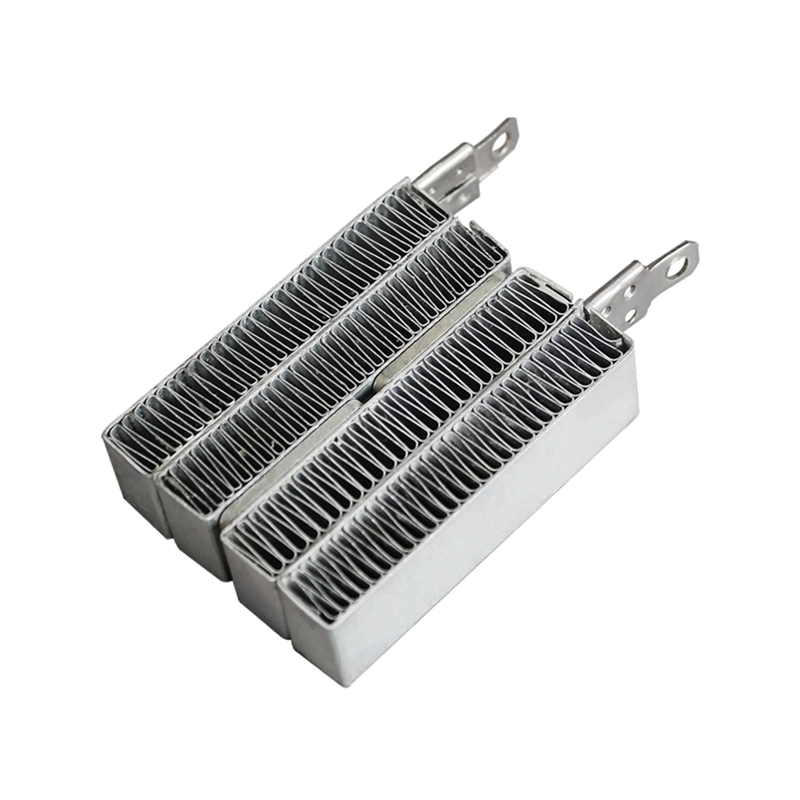
Custom PTC Fin Heater Element | 12V-220V | 50W-200W
🛡️ Premium Materials & Custom Solutions: PTC ceramic element with aluminum corrugated fins. Flameless, non-red-hot, safe for long-term use. Custom voltage, wattage, and size available — OEM/ODM supported.
🛡️ Wide Voltage Range, Efficient Heat Transfer: Supports 12V–220V, 50W–200W depending on model. Fast heating via airflow conduction; stable for continuous industrial use.
🛡️ Wide Industrial Application: Ideal for air purifiers, ventilation systems, dehumidification units, and heating modules in high-humidity environments.
Customization: Logo / Color / Material / Packaging
Technical Specs
Applications
1 What is the difference between conductive and insulated PTC heaters?
Insulated Type: Electrically insulated surface, safe for direct contact with plastics and various materials.
Conductive Type: Conductive surface with lower cost and higher power density; proper housing and insulation protection required.
2 What is the surface temperature?
The standard steady-state surface temperature ranges from 200°C to 230°C, with custom temperature configurations available upon request to meet specific application requirements.
3 Is 380V customization supported?
Yes, 380V customization is supported.
4 Can it directly contact metal equipment?
Yes, as long as proper grounding and insulated mounting are in place. However, direct human contact during operation is strictly prohibited due to high temperatures and electrical hazards.
5 What wiring methods are available?
We offer three standard termination options: lead wires, solder tabs, and screw terminals. For high-power applications, series, parallel, and three-phase (star or delta) connections are available to suit your system requirements.
NEED A CUSTOM HEATING SOLUTION?
Tell us your requirements and our engineering team will provide you with the best solution.